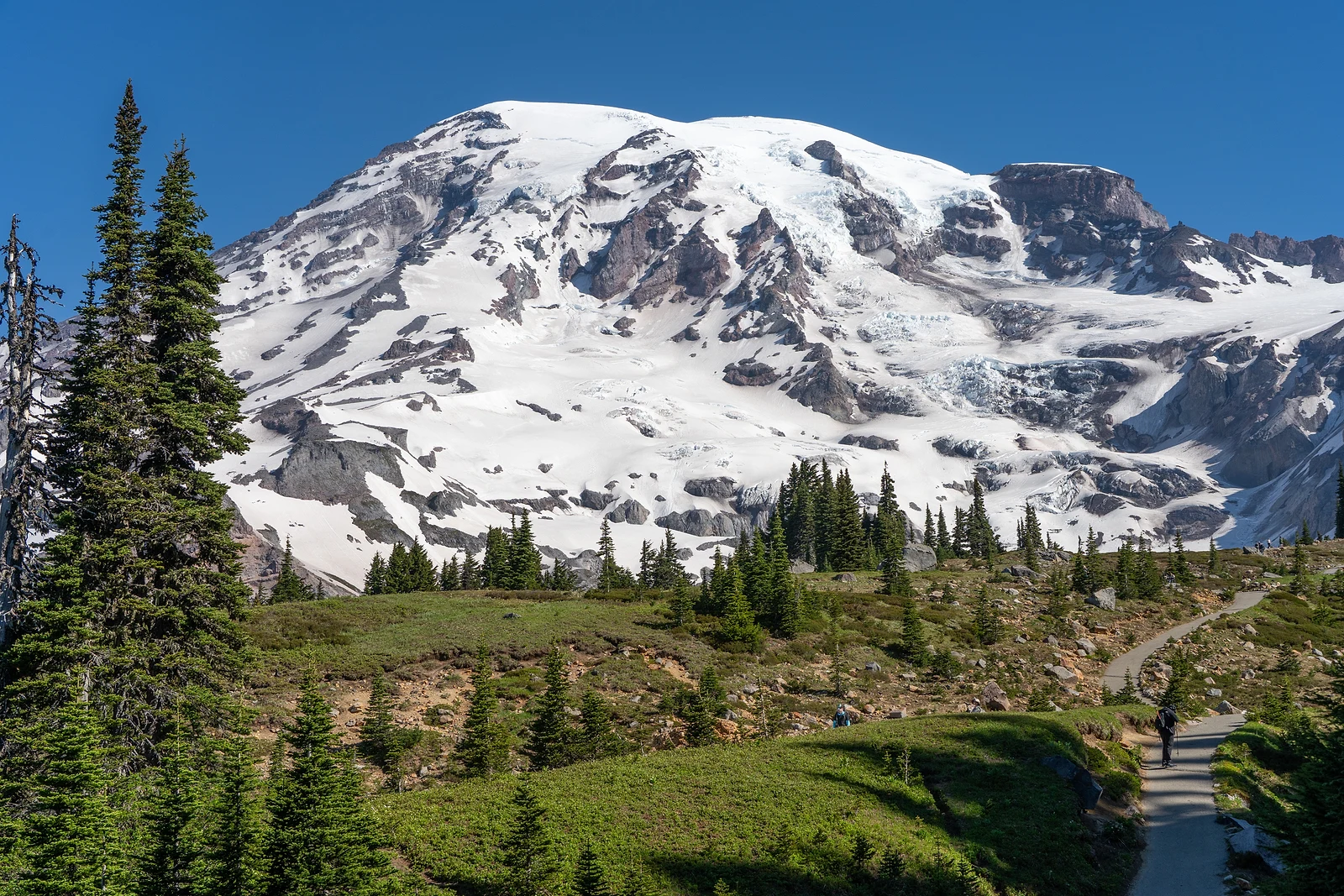
The one that can be seen anywhere around Seattle and surronding area
Disappointment Cleaver is the most travelled route to the top of the Mount Rainier 14,410 summit. It accounts for around 75% of the traffic and is also the most guided route in North America. Because of this, on a good weather day, navigation won't be an issue, and there are wands flagging the route the entire way from Camp Muir to the summit. Still, to get to the summit pleasantly, you need to watch the weather. We turned back a week earlier after heavy snow in June. The snow collapsed the ladder on the Ingraham Direct route and created a wind slab problem in the upper mountain. Wind was a big factor in turning teams back too. I recommend using the Mount Rainier Recreational Forecast to monitor conditions.
We picked up our rental single boots from Whittaker Mountaineering, since we had gone to the summit the week before and found our feet colder than we wanted in our La Sportiva Aequilibrium. They have a much wider selection of boots than any other rental in the Seattle area. We also picked up our permit the day before. Expect a long line for the permit, which leaves you less time to rest and acclimatize at Camp Muir.
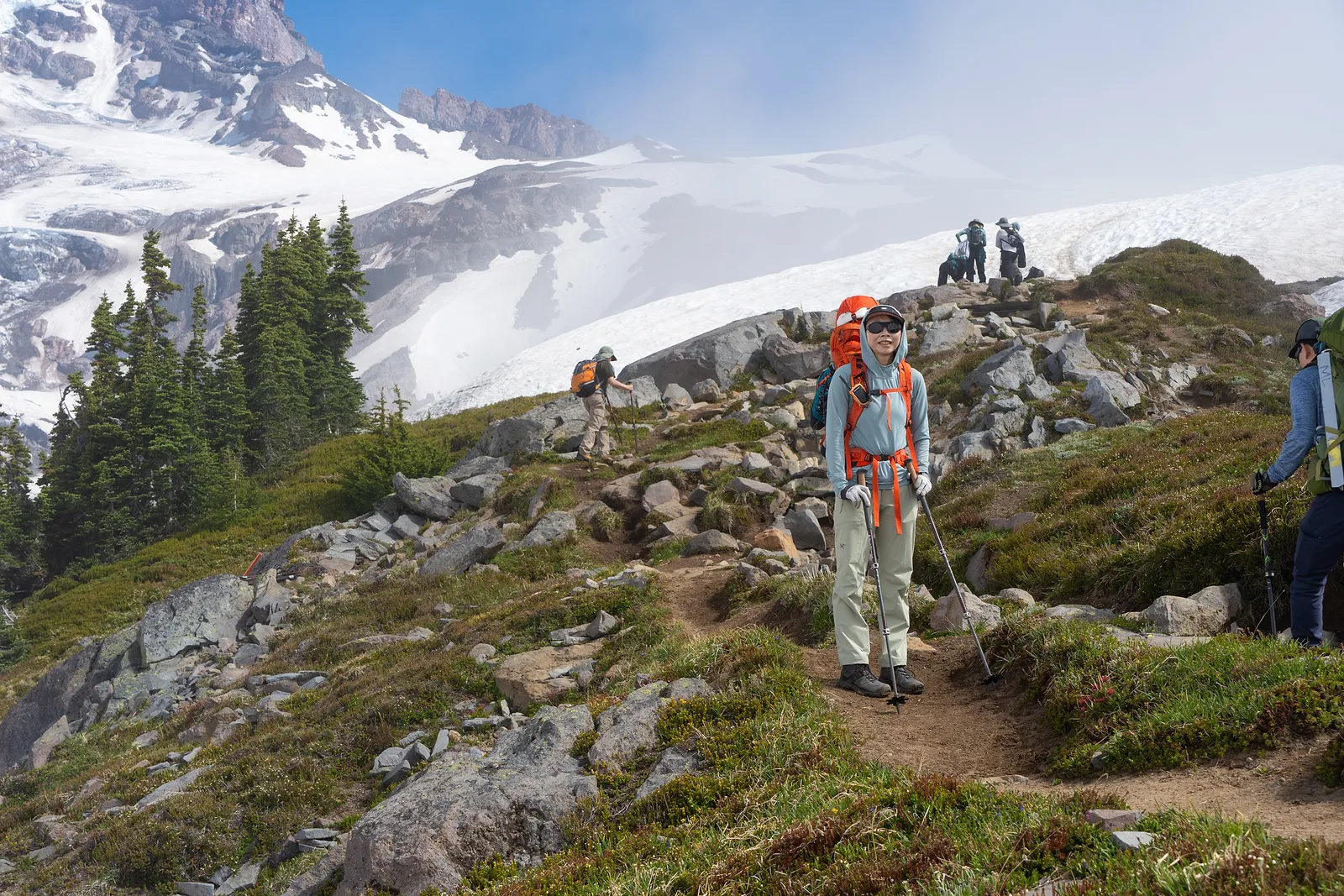
We spent around five and a half hours getting to Camp Muir from the parking lot. There is no running water at Camp Muir, so we had to melt snow and filter it. Preparing the snow surface for the tent is also time consuming, though you can just improve a tent space another team left behind. After we finished dinner, we quickly went to sleep. We were set to start at 12 AM, and start times generally fall between 11 PM and 2 AM, mostly depending on the daytime temperature. It was a bit hard to fall asleep, but we managed 3 to 4 hours. The rest at camp is a must for me, since I always get altitude sickness after 11,000 ft. This time I even had a headache and nausea at Camp Muir.
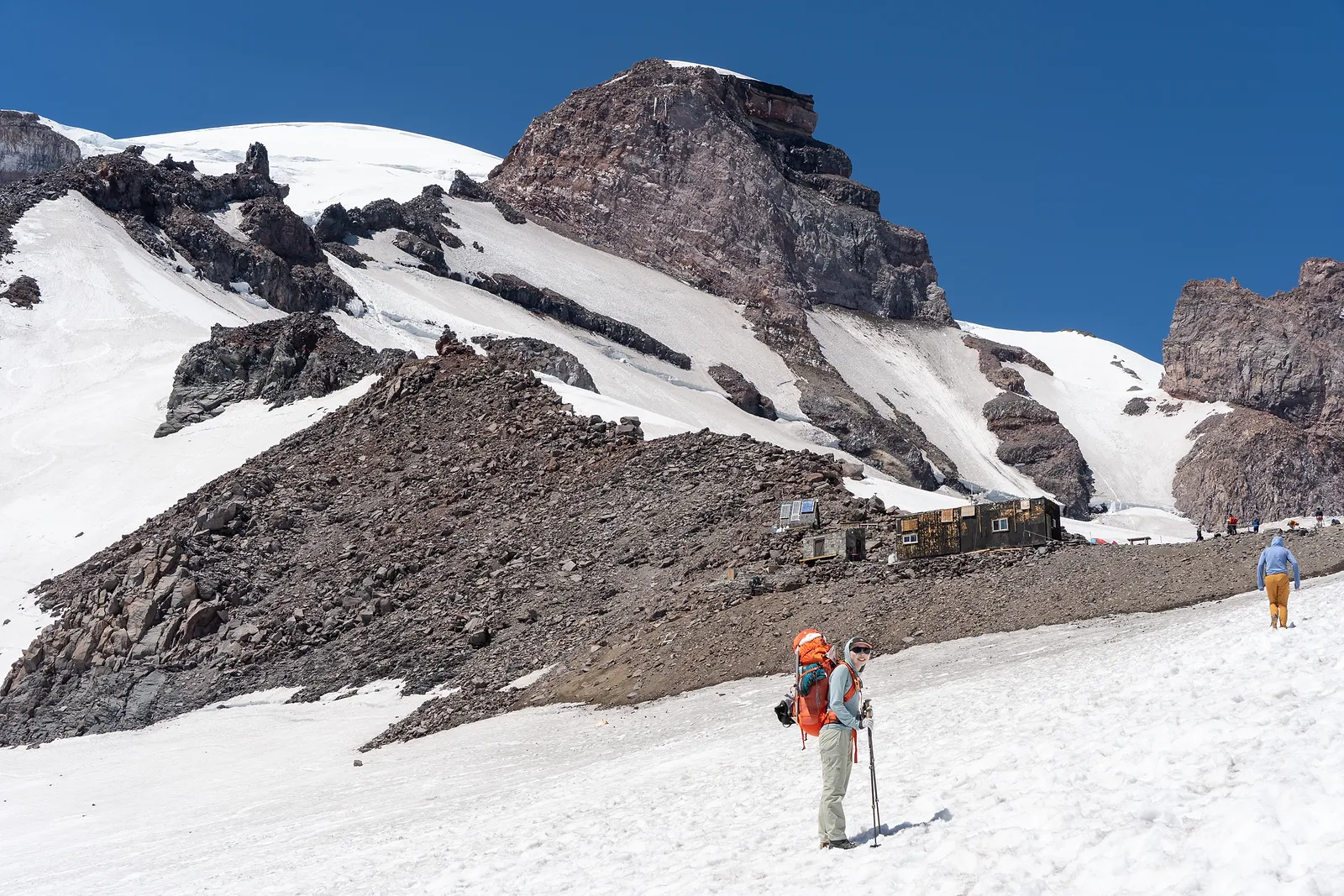
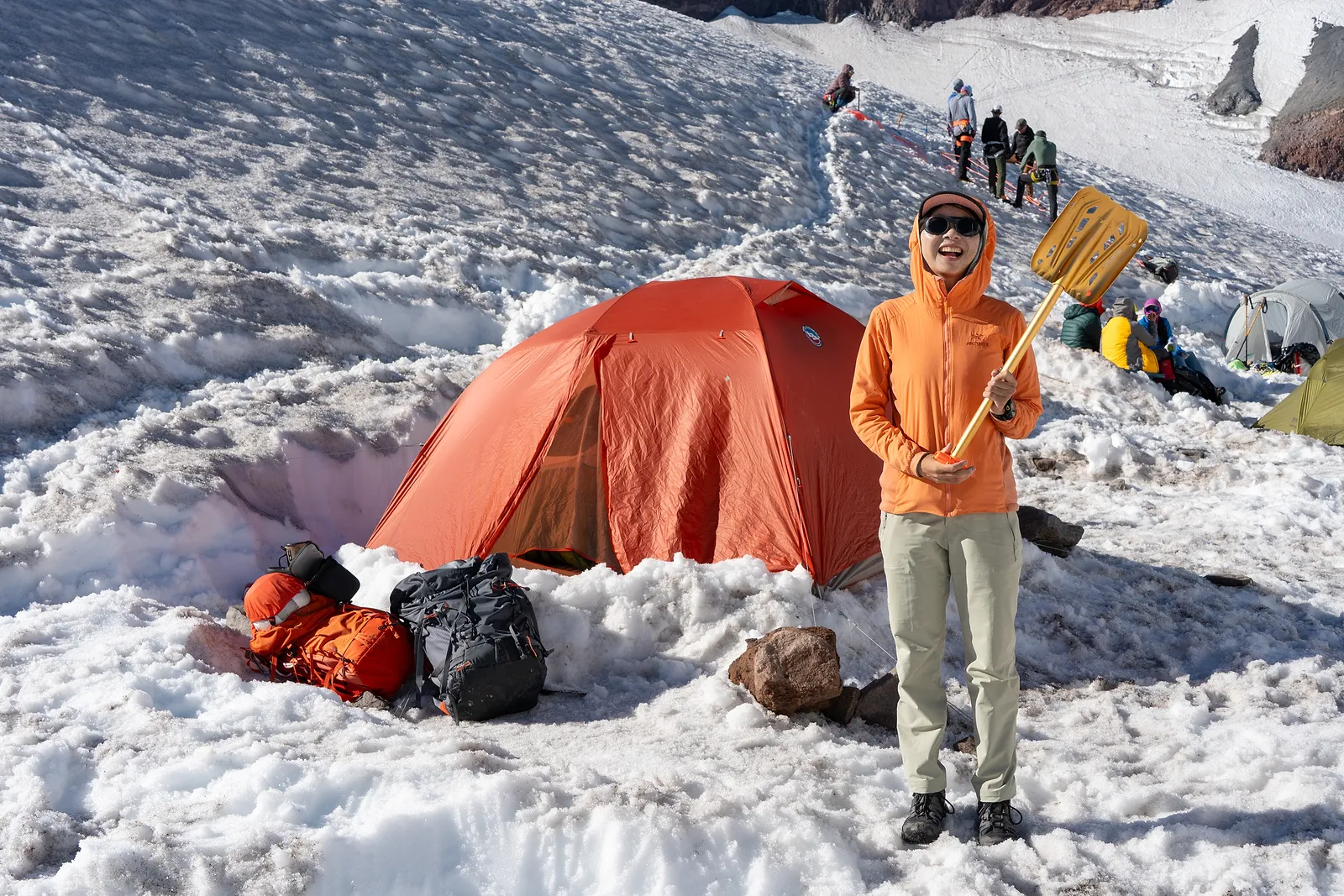
We woke up at 11 PM, and my headache and nausea were almost gone after some sleep and ibuprofen. Camp Muir was forecasted for 25 mph wind, but it was almost nonexistent. I think the main reason is that the wind was from the NW and Camp Muir is sheltered from that direction. Our friend spent the night at Emmons, and her tent collapsed during the high wind.
The hike to Ingraham Flats is gentle, and we quickly made our way to the flats, ready to head up the Disappointment Cleaver. We were in the first week of the route transition from ID to DC. The cleaver itself was mostly snow covered with some snow over rock. It didn't cause us much trouble, since the snow is great when it has hardened overnight.
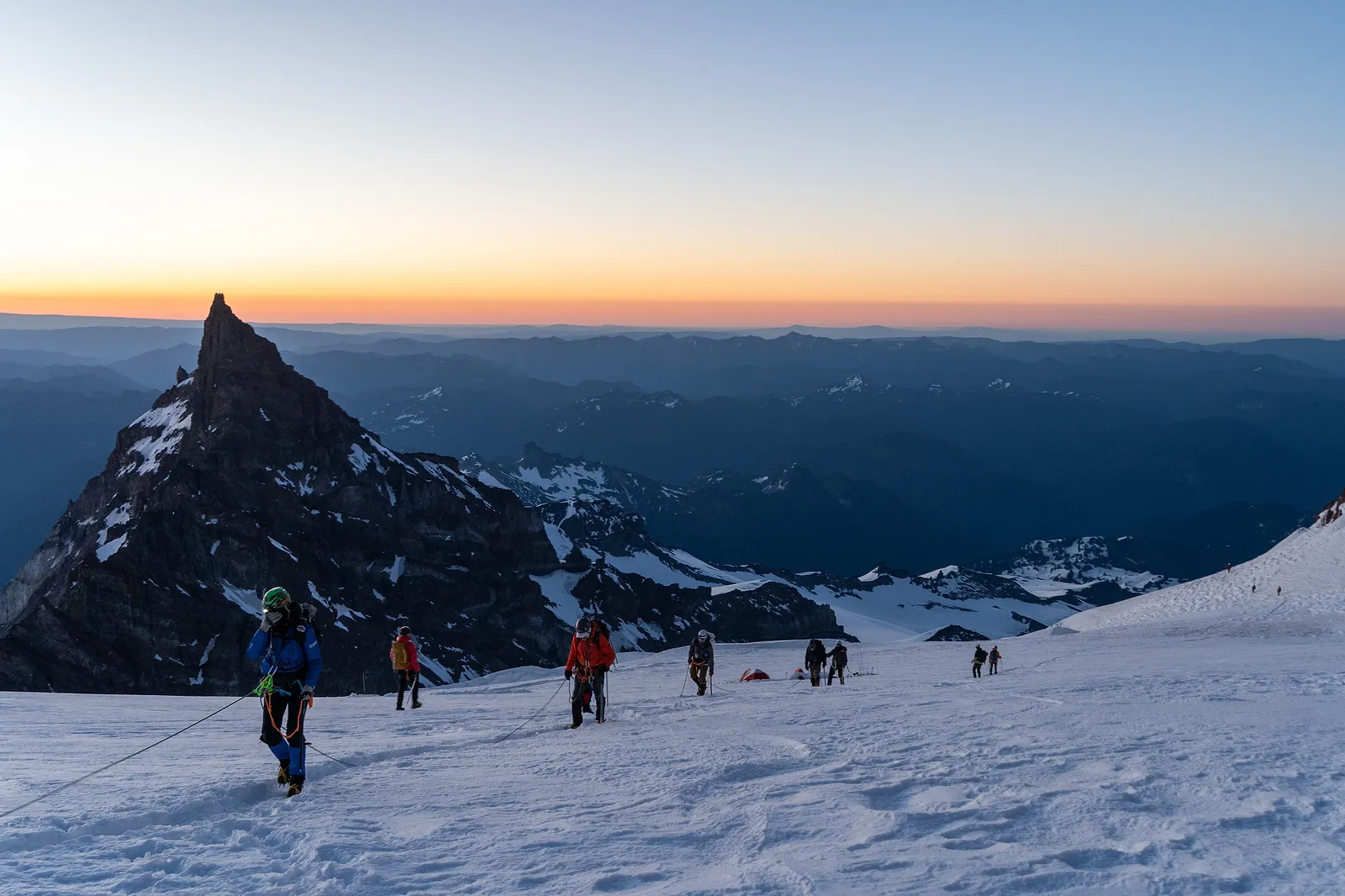
We made our way to the top of the cleaver and reached 12,200 feet. The terrain above is featureless, nothing but snow. Without the wands, I think it would be very hard to navigate the crevasse labyrinth, and we couldn't have known exactly where we were. Luckily the DC route was in good condition, with no ladder needed on the whole mountain, and the 6 to 7 crevasse crossings were almost trivial. I also saw more two person parties than I expected. Maybe that's because every crevasse crossing had a picket in place that you could use to set up a running belay if you wanted.
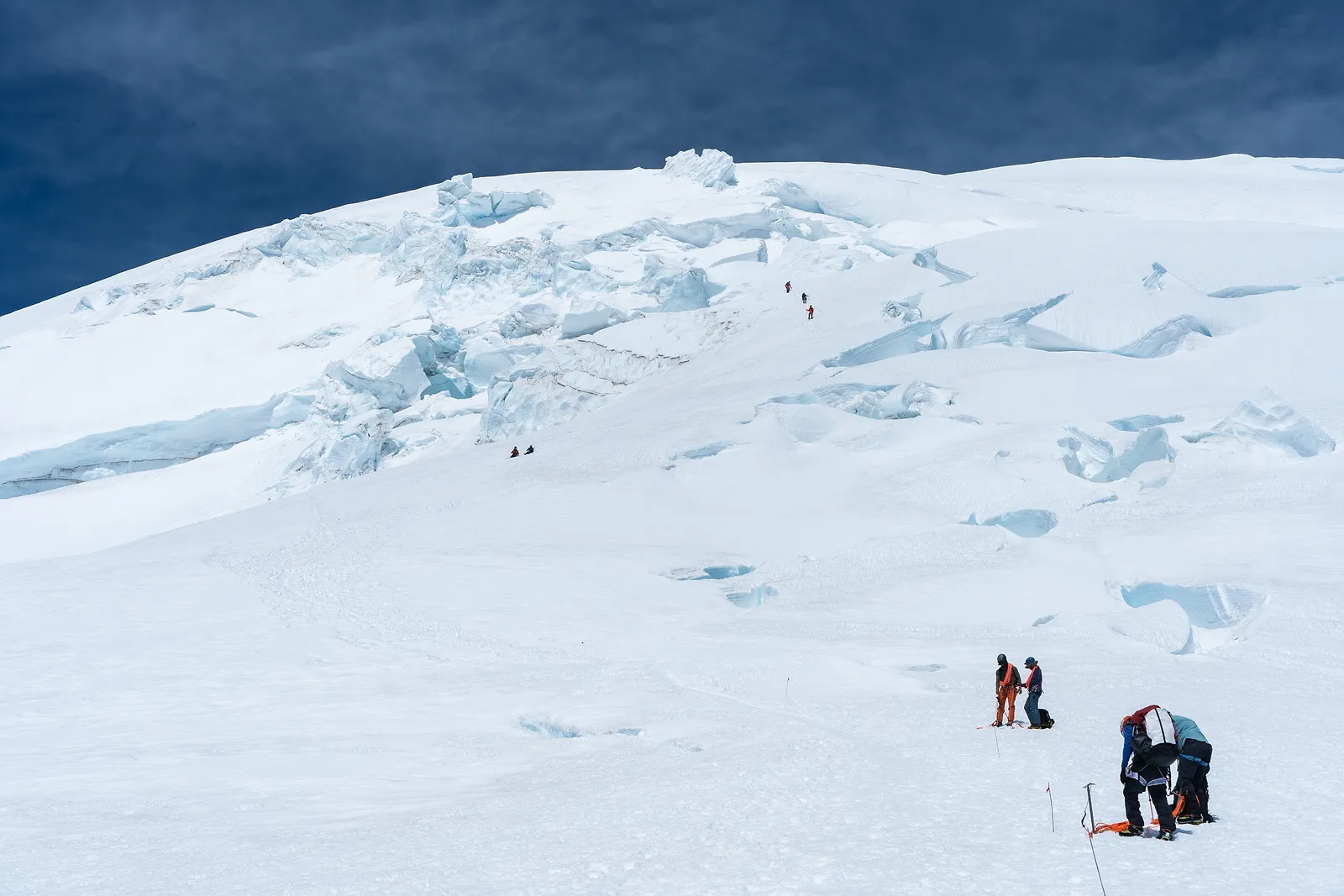
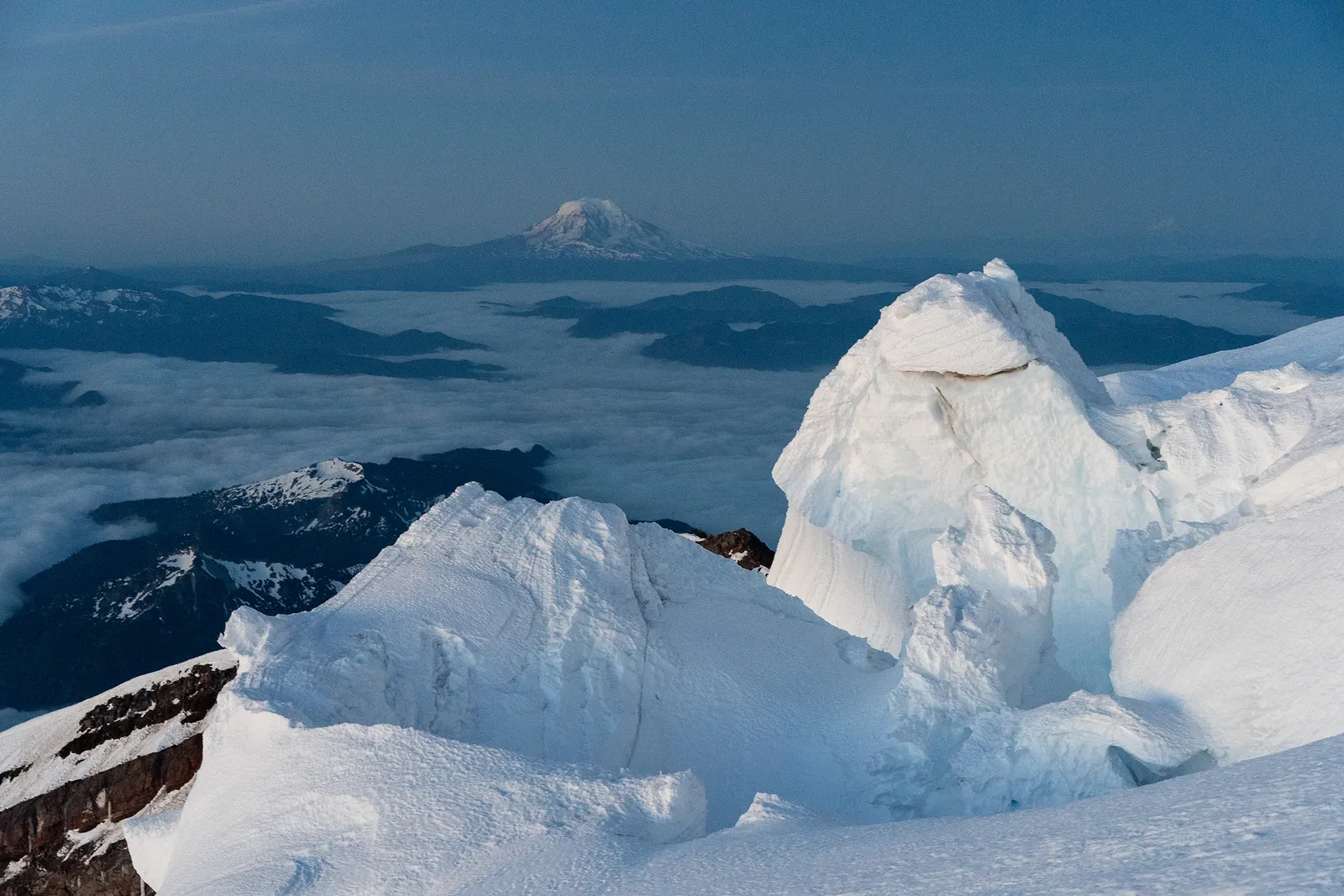
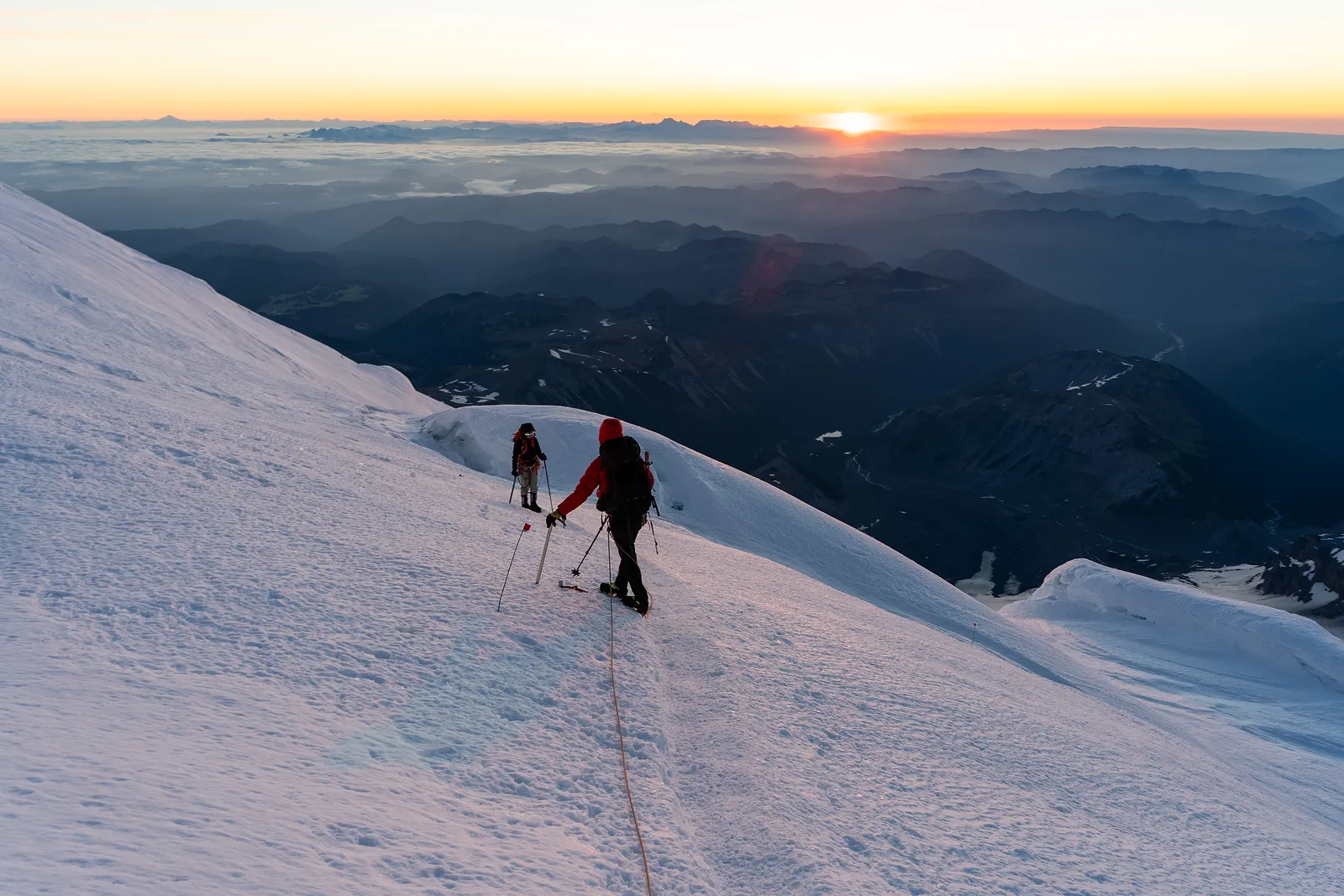
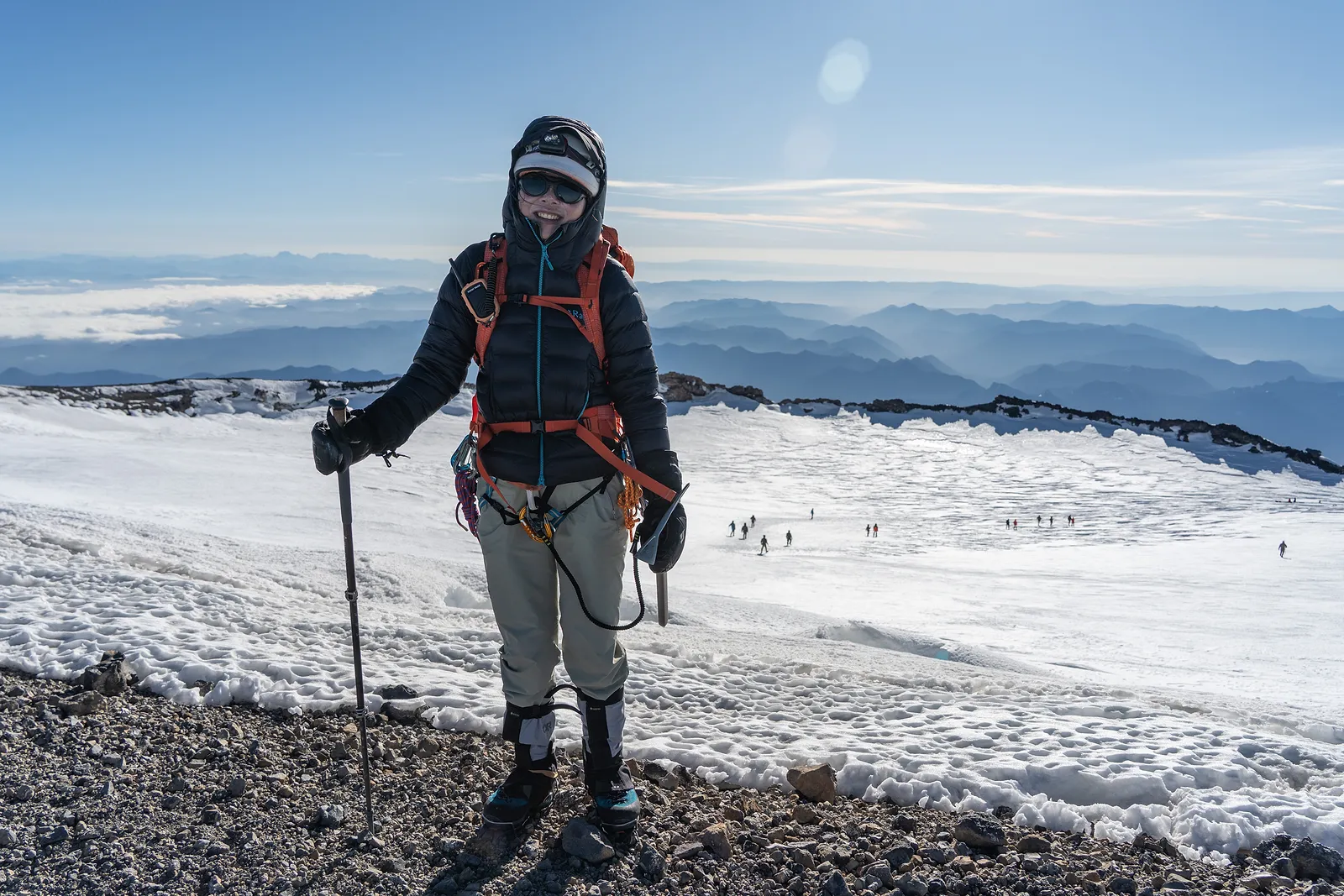
Our pace slowed as we climbed higher, and we still couldn't see where the top was. Then all of a sudden we reached the crater, with the summit right in front of us. We were excited to unrope and start our final push. Twenty minutes later, the summit. I got emotional up there. Rainier was my initial goal when I joined the Mountaineers, and five years later I was finally able to summit it confidently and unguided.
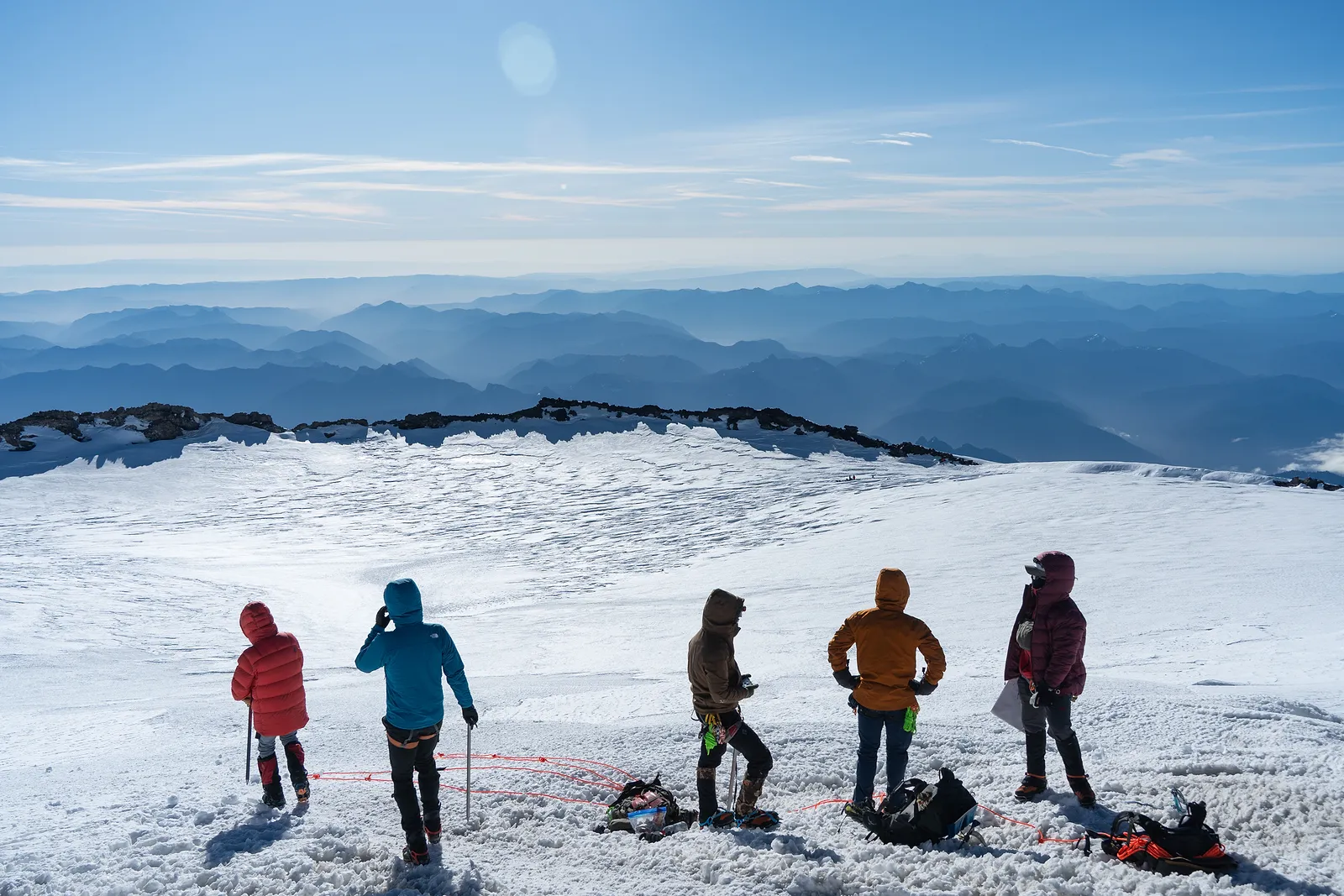
The descent is long, and my altitude sickness had been building as we gained elevation. We were on the slower side, taking 13 hours round trip from camp, and I heard guided groups usually take 10 to 12 hours. But whatever, we made it.